
ALICE and Urban logistics projects at Urban Mobility days (UMDs) in Sevilla
ALICE and other Urban logistics projects were at the Urban ...



Data-driven, Integrated, Synchromodal, Collaborative and Optimised urban freight meta model for a new generation of urban logistics and planning with data sharing at European Living Labs
AUTOSUP is a Horizon Europe Research and Innovation Action that aims to accelerate the transition towards seamless multimodal automated freight transport and strengthen the role of logistics hubs as interconnected nodes within a Physical Internet logistics network
Ongoing
42 months
Horizon Europe Innovation Action
HORIZON-CL5-2022-D6-02
101103954
European cities are facing increasing pressure to manage growing freight transport demand while reducing congestion, emissions and inefficient use of urban space. Freight data remains fragmented across stakeholders, limiting cities' ability to plan and manage logistics operations effectively.
DISCO addresses this challenge through a federated European Urban Freight Data Space that enables secure, trusted and voluntary data sharing between public and private stakeholders. The project combines advanced data infrastructures, digital tools and Physical Internet principles to create a new generation of Sustainable Urban Logistics Plans (SULPs) integrated with Sustainable Urban Mobility Plans (SUMPs).
Objectives
DISCO aims to:
Develop a federated European Urban Freight Data Space for trusted and interoperable data sharing.
Develop a Physical Internet-led Meta Model Suite to support the digital transformation of urban logistics.
Improve freight visibility, data-driven decision-making and planning capabilities for cities and logistics stakeholders.
Enable the secure, interoperable and scalable exchange and reuse of urban logistics data.
Demonstrate and validate innovative urban logistics solutions through Starring and Twinning Living Labs across Europe.
Support the integration of urban logistics solutions and approaches into SULPs and SUMPs.
Support the replication and transferability of successful solutions across different European urban contexts.
Support the market uptake and exploitation of innovative urban logistics solutions through viable business models and exploitation pathways.
Expected results
Key project outputs include:
European Urban Freight Data Space.
DISCO Meta Model Suite.
Urban logistics digital transition, Digital Twin and data-driven applications for urban logistics planning and operations.
Data governance, interoperability and onboarding frameworks enabling trusted data exchange and reuse through the Urban Freight Data Space.
Urban logistics planning and decision-support tools and solutions demonstrated through the Living Labs.
Policy recommendations and guidance supporting the integration of innovative urban logistics solutions into SULPs and SUMPs.
Business models, exploitation strategies and IPR approaches supporting the uptake and sustainability of key project results.
Replication blueprints and implementation guidance supporting transfer to other European cities.
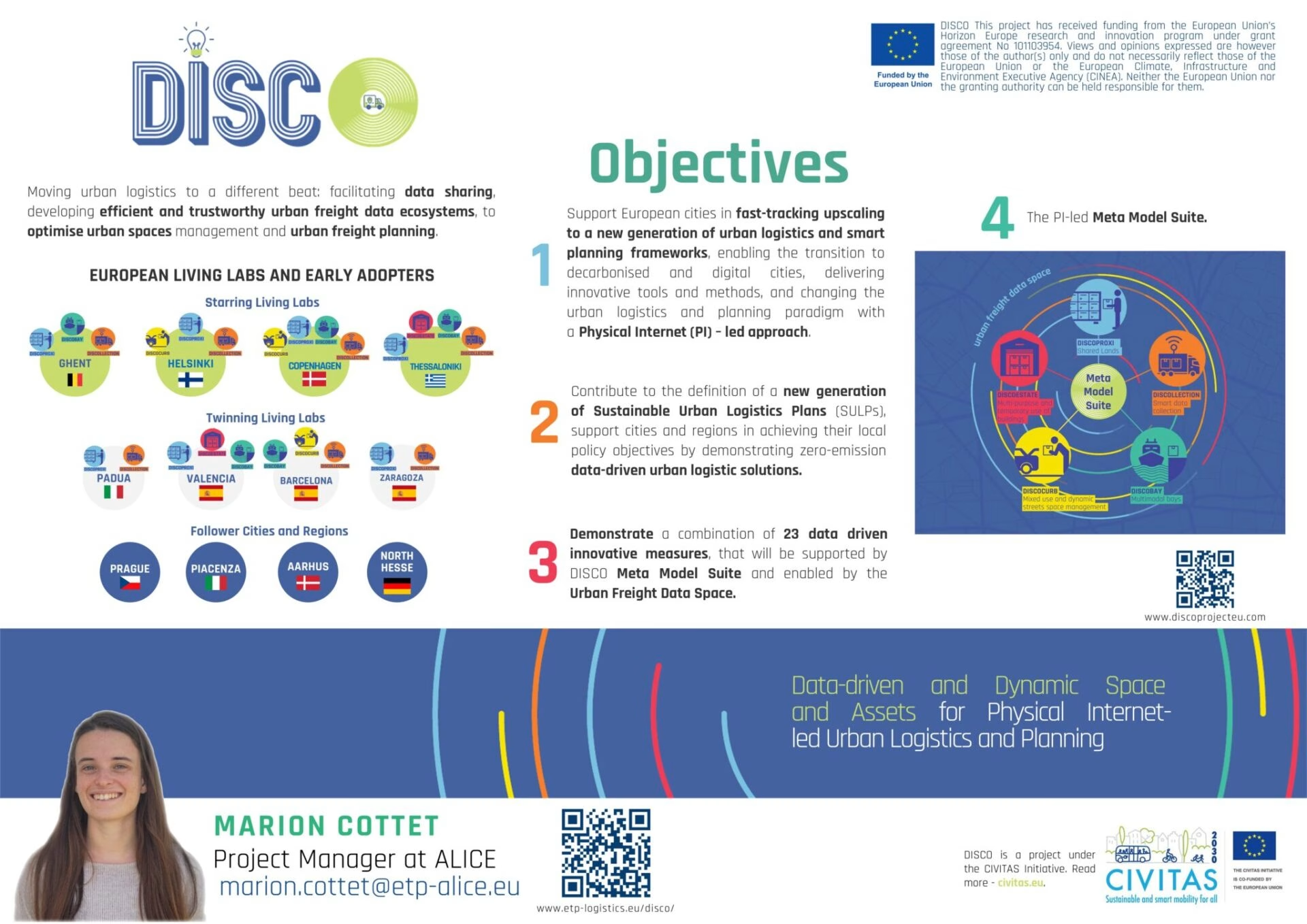
DISCO validates its solutions through a network of living labs and follower cities across Europe.
01 Piacenza (Italy)
02 Prague (Czech Republic)
03 North Hesse (Germany)
04 Aarhus (Denmark)
DISCO develops a portfolio of complementary innovations.
The DISCO Meta Model Suite brings together five interconnected innovation areas: DISCOCURB for dynamic curbside and street-space management; DISCOPROXI for shared urban spaces, lockers and proximity delivery solutions; DISCOESTATE for multi-purpose and temporary use of building space; DISCOBAY for multimodal consolidation and distribution; and DISCOLLECTION for smart data collection, access control and real-time routing.
ALICE participates in DISCO to strengthen knowledge and expertise on Physical Internet-enabled urban logistics, data sharing and sustainable planning. ALICE serves as the Exploitation Manager and is a member of the Project Governing Board (PGB).
The project consortium is led by Paola Cossu, CEO of FIT Consulting and Co-Chair of ALICE Urban Logistics Thematic Group and consists of 46 additional partners representing different stakeholders.












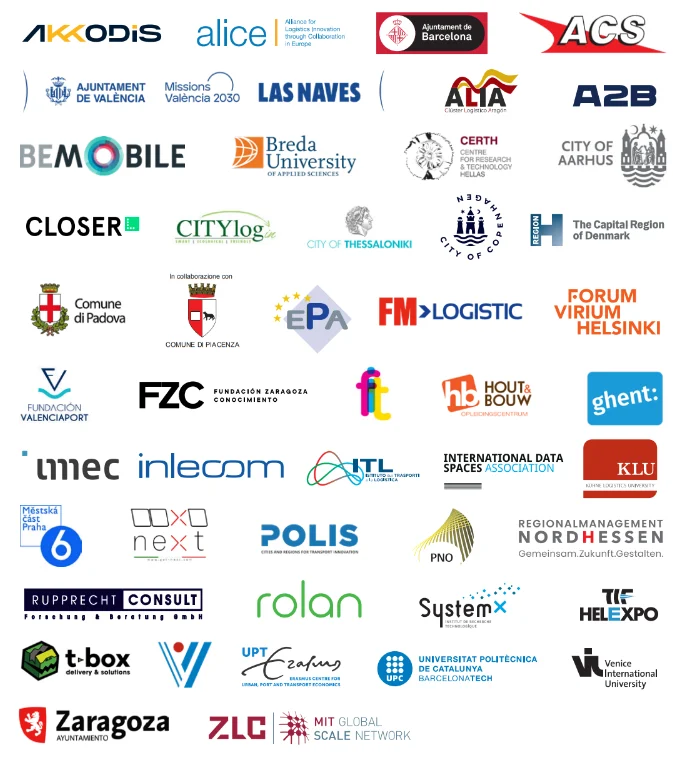
The consortium also includes cities, local authorities, research institutes, innovation centres, universities, technology and services providers, clusters, data associations, consulting offices.
ALICE and other Urban logistics projects were at the Urban ...
We are thrilled to announce that ALICE stands out among ...
ALICE is one of the co-organizers of the next Transport ...
Several research and innovation projects on urban logistics funded by ...

As urban populations grow and urban flows expand, cities are ...
As a key infrastructure in urban logistics, parcel lockers are ...

di Background: The rules for common European data spaces cover ...

The future of efficient logistics through synchronised data sharing In ...

DISCO This project has received funding from the European Union’s Horizon Europe research and innovation program under grant agreement No 101103954. Views and opinions expressed are however those of the author(s) only and do not necessarily reflect those of the European Union or the European Climate, Infrastructure and Environment Executive Agency (CINEA). Neither the European Union nor the granting authority can be held responsible for them.