What are you looking for?
ALICE Logistics
Home / Activities / Thematic Groups / Corridors, Hubs and Synchromodality

Corridors, Hubs and Synchromodality

Supporting connected, resilient and low-emission freight corridors through better integration of ports, hubs, terminals and multimodal logistics services.

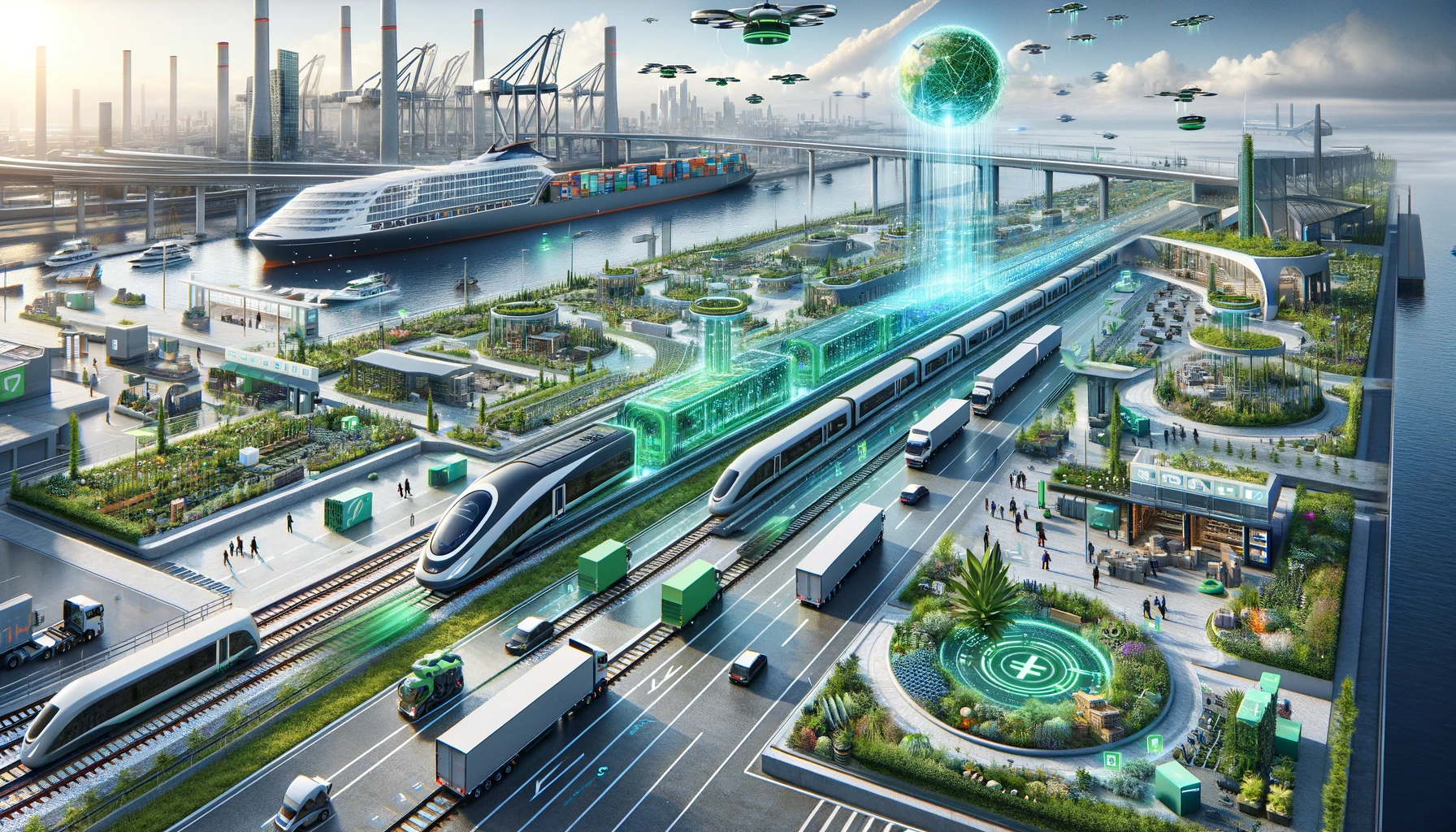
ALICE Thematic Group 2 (TG2) focuses on corridors where ports, terminals and inland hubs enable seamless multimodal freight services. The objective is to improve reliability and capacity, reduce emissions, and support automation-ready processes at node level, enabled by the sharing of standardised operational and compliance data.

TG2 structures its activities around Ports & Hubs, Rail Freight, and Waterborne & Inland Waterways. It addresses port and terminal processes and port-hinterland synchronisation; rail connectivity between major nodes and corridor services; and maritime, short-sea shipping and inland waterway interfaces with ports and hinterland corridors. Resilience of corridor-and-node operations is also part of the TG2 scope.

TG2 supports synchromodal and multimodal freight services by strengthening the integration of transport modes, logistics nodes and corridor operations. In parallel, it applies TG3 digital enablers, including interoperable data exchange and eFTI-enabled compliance, digitalisation, AI and Digital Twins to improve interoperability and performance in real corridor and node operations.

Recent activities

Scope and strategic focus

TG2 focuses on resilient corridor-and-node operations and on the integration of ports, terminals and inland hubs within seamless multimodal freight services. Its work addresses reliability and capacity, port-hinterland synchronisation, modal integration, standardised operational and compliance data, and automation-ready processes at node level.

The programme is structured around key operational domains: Ports & Hubs, Rail Freight, and Waterborne & Inland Waterways. Ports & Hubs focuses on node needs, port and terminal processes and port-hinterland synchronisation; Rail Freight on connectivity between major nodes and corridor services; and Waterborne & Inland Waterways on maritime, short-sea shipping and inland waterway interfaces with ports and hinterland corridors. Logistics automation is addressed as an application domain in nodes and corridor services. 

Thematic Group 2 contributes to the following long-term impact

Decarbonisation

by supporting seamless multimodal services and strengthening rail and waterborne transport within corridor and node operations

Digitalisation

by applying digital and system enablers addressed across ALICE, particularly through TG3, including interoperable data exchange, eFTI, AI and Digital Twins, to real corridor and node operations

Resilience

by improving the continuity of corridor-and-node operations

TG2 operationalises ALICE roadmaps in corridor-and-node operations, with Ports & Hubs as a key deployment domain.

Main focus areas

Ports and hubs

The Ports & Hubs Group brings together ports, terminals, inland hubs and logistics stakeholders to accelerate innovation deployment and strengthen port-hinterland integration. Building on the EU Ports Strategy Task Force launched in 2025, it consolidates operational needs, deployment barriers, good practices and R&I priorities for more integrated, interoperable and resilient logistics nodes.

Synchromodal corridors and multimodal services

TG2 supports seamless multimodal freight services by strengthening the integration of transport modes, logistics nodes and corridor operations. The focus is on improving reliability and capacity, reducing emissions and enabling better synchronisation between ports, terminals, inland hubs and the transport services connecting them across European freight corridors. 

Rail freight 

TG2 addresses rail as backbone connectivity between major logistics nodes and corridor services. It focuses on rail freight connectivity, node and terminal interfaces and integration within multimodal corridor operations, while exploring synergies with Europe’s Rail and ERRAC to connect TG2 operational needs with relevant rail research and innovation priorities. 

Waterborne transport and inland waterways

TG2 strengthens maritime, short-sea shipping and inland waterway interfaces with ports and hinterland corridors. It connects waterborne transport with multimodal logistics operations and explores synergies with Waterborne and PLATINA for Action, including relevant developments in automation and digitalisation for waterborne and inland waterway operations. 

Logistics automation in nodes and corridors

TG2 acts as a deployment domain for logistics automation in ports, terminals, inland hubs and corridor services. It focuses on deploying and validating automation in real operations and on the conditions needed to scale, including automation-ready processes, interoperability, safety and people-related aspects, deployment barriers and links with TG3 digital enablers. 

Resilient multimodal networks

TG2 addresses the continuity and resilience of corridor-and-node operations as part of reliable multimodal freight networks. The focus is on strengthening operational continuity across corridors, ports, terminals and hubs, while connecting TG2 operational needs with relevant digital resilience capabilities and enablers addressed within TG3. 

From strategy to impact

TG2 translates ALICE’s strategic priorities for corridors, hubs and synchromodality into activities focused on real corridor-and-node operations, with Ports & Hubs as a key deployment domain. 

The Thematic Group connects operational priorities with relevant projects and European initiatives. Projects provide practical use cases, deployment experience and lessons from ports, terminals, corridors and multimodal transport operations, while relevant European initiatives provide links to wider research and innovation priorities.

In Ports & Hubs, TG2 connects its work with developments related to the EU Ports Strategy. In Rail Freight, it connects with Europe’s Rail and ERRAC, while in Waterborne & Inland Waterways it explores synergies with Waterborne and PLATINA for Action. 

TG2 also applies digital and system enablers addressed across ALICE, particularly through TG3, including interoperable data exchange, eFTI, digitalisation, AI and Digital Twins, to corridor-and-node operations.

This work contributes to the ALICE 4 Impact approach by linking ALICE strategic roadmaps with implementation and deployment in corridor-and-node operations. Through this approach, TG2 connects multimodal transport priorities, logistics nodes, innovation projects and enabling technologies within a common programme.

Related news

Tangible results

TG2 contributes to strategic, technical and policy-oriented outputs linked to corridor integration, ports and hubs, synchromodality, automation, resilience and multimodal freight networks.

Roadmaps

Policy and initiative links

  • ALICE contribution to the EU Ports Strategy. Input consolidating member priorities on port innovation, funding, interoperability, resilience, deployment conditions and port-hinterland connectivity.
  • Ports & Hubs. A structured ALICE space for ports, inland hubs, terminals and logistics stakeholders to define shared needs, good practices and priority research and innovation topics.
  • TEN-T Corridors & Nodes and CEF. Relevant to corridor-node interoperability, dual-use infrastructure, deployment on corridors and scaling of innovation in logistics nodes.
  • Waterborne, Europe’s Rail and ERRAC cooperation. Strategic cooperation connecting waterborne, rail and multimodal logistics priorities with TG2 activities.
  • Automation in Logistics activity line. An ALICE activity focused on automation in logistics nodes and corridor services, linked to project evidence, operational deployment needs and the scaling of automation solutions.

Ongoing projects

AutoMoTIF logo

Automation Towards Multimodal Transportation and Integration of Freight

AutoMoTIF advance the integration and interoperability of automated transport systems to enable seamless, efficient and sustainable multimodal freight transport across Europe.

AUTOSUP logo

Preparing the ground for AUTonomous Multimodal SUPply Chains

AUTOSUP is a Horizon Europe Research and Innovation Action that aims to accelerate the transition towards seamless multimodal automated freight transport and strengthen the role of logistics hubs as interconnected nodes within a Physical Internet logistics network.

FOREMAST logo

Freight vOlumes transfer from Road to waterborne transport, using zero-EMission, Automated, Small and flexible vessel protoTypes

FOREMAST is developing a new generation of Small, Flexible, Automated Zero-Emission (SFAZ) vessels to enable a shift of freight from road transport to cleaner and more efficient inland waterway and coastal logistics.

Pionners Logo 300x83 1

PORTable Innovation Open Network for Efficiency and Emissions Reduction Solutions

PIONEERS develops and demonstrates innovative technologies, digital solutions and clean energy systems to accelerate the transition towards greener, smarter and more efficient European ports.

Seamless new logo 1 300x77 1

Safe, Efficient and Autonomous: Multimodal Library of European Shortsea and inland Solutions

SEAMLESS is developing a fully automated, economically viable and resilient waterborne freight feeder service for Short Sea Shipping (SSS) and Inland Waterways Transport (IWT), combining autonomous vessels, automated port infrastructure and digital logistics management to enable seamless, zero-emission freight flows across Europe.

Completed projects: results and legacy

CRISTAL project

Climate resilient and environmentally sustainable transport infrastructure, with a focus on inland waterways

CRISTAL contributes practical cases on inland waterways, monitoring, digital twins and infrastructure innovation.

MULTIRELOAD logo

Port solutions for efficient and sustainable multimodality

MultiRELOAD develops solutions to improve the efficiency, safety and sustainability of inland multimodal freight terminals, supporting the shift from road transport to rail and inland waterways.

remunet logo wh150 1

Resilient Multimodal freight Transport Network

ReMuNet addresses disruption management and resilience in multimodal freight transport networks.

SARIL

Sustainability And Resilience for Infrastructure and Logistics networks

SARIL focuses on the resilience of logistics networks and infrastructure systems.

Knowledge Platform

The ALICE Knowledge Platform gives TG2 members access to more detailed knowledge, including newsletters, presentations, project outputs, policy updates, workshop materials and discussion spaces.

Leadership

TG2 is led by representatives from the ALICE membership and supported by the ALICE Secretariat.

Co-Chairs

  • Salvador Furió, Valenciaport Foundation
  • Lars Deiterding, HACON

Vice-chairs

  • Kris Neyens, VIL
  • Zisis Palaskas, Inlecom
  • Pablo Segura, ALICE
  • Tomasz Dowgielewicz, ALICE
  • Nik Delmeire, ALICE
  • Elvina Nowak, ALICE

ALICE Programme Manager

Giuseppe Luppino

Interested in joining the ALICE Thematic Group 2 Corridors, Hubs and Synchromodality?

TG2 is relevant for organisations working on multimodal freight transport, ports, inland hubs and terminals, port-hinterland connectivity, synchromodal logistics services, rail freight and corridor services, inland waterways and short sea shipping, logistics automation in nodes and corridors, resilient transport networks, digital tools for corridor and node operations, European infrastructure, policy and research priorities.

What members can engage with?

Members can contribute by sharing operational experience, joining task forces and workshops, providing input to research and innovation priorities, connecting with projects, contributing to policy discussions and using the Knowledge Platform to exchange resources and insights.